
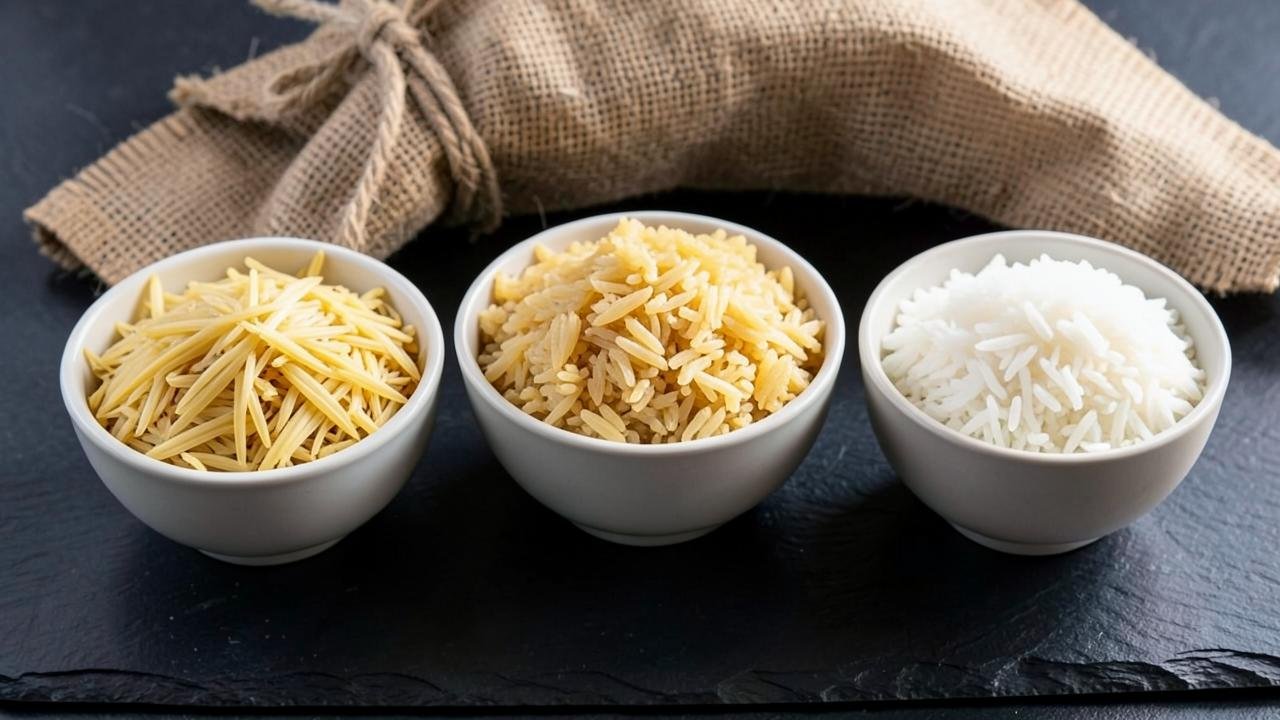
Rice is the most-traded product in our portfolio and the one where buyers most often order the wrong thing. The categories overlap in the way they are marketed, but behave very differently in cooking, in shelf performance and in price.
Basmati: aroma, elongation and age
Basmati is defined commercially by its extra-long slender grain, its aroma, and above all by cooked elongation, good basmati roughly doubles in length without becoming sticky. It is grown in specific regions of Pakistan and India, and the variety name (1121, 1509, Super Kernel, PK-386) tells you more about what you are buying than the word 'basmati' does.
Ageing matters. Freshly milled basmati cooks softer and clumps; rice aged twelve to twenty-four months cooks drier and separates. Aged stock costs more for that reason, and a buyer who specifies 'basmati' without specifying age and variety will usually receive the cheapest current-crop option available.
- Specify: variety, average grain length (mm), cooked elongation ratio, moisture, broken %, crop year and ageing period
- Sortex-cleaned grades command a premium and reduce foreign matter complaints
- Retail and foodservice buyers often need different length grades from the same mill
Parboiled: processing, not variety
Parboiled rice is not a botanical category, it is a process. Paddy is soaked, steamed and dried before milling, which drives nutrients into the endosperm, hardens the grain and produces the characteristic amber tint. The result is a rice that resists overcooking, holds up in buffet and institutional service, and yields fewer brokens during milling.
Parboiled rice is the workhorse of institutional catering, West African and Middle Eastern retail, and food-aid tenders. Buyers should specify degree of parboiling (light or full), colour tolerance, and whether double-polished, because colour variation is the most common cause of rejection.
Long-grain white: the volume category
Long-grain white rice, including IRRI-6, IRRI-9 and jasmine-type origins, is the price-driven volume category. It moves on freight economics and origin availability more than on brand, and the specification conversation is dominated by broken percentage. A 5% broken and a 25% broken are entirely different commercial products serving different end markets.
For jasmine and other fragrant long grains, treat aroma and purity of variety as a specification line, not an assumption. Blending is common in the lower price tiers.
Writing a rice specification that survives arrival
Then name the inspection company and the point of inspection. Loading-port inspection with a retained sealed sample resolves the overwhelming majority of quality disputes before they become claims.
- Type, variety and origin
- Broken percentage and tolerance
- Moisture (typically 12–14% maximum)
- Foreign matter, damaged/discoloured grains, chalky grains
- Milling degree and sortex requirement
- Crop year and ageing
- Packing: 5/10/25/50 kg, bag type, printing, palletisation
- Fumigation, phytosanitary and any destination-specific certification
Pricing behaviour
Basmati pricing follows crop size, ageing stock and Gulf demand cycles. Parboiled follows institutional tenders and West African import policy. Long-grain white follows the broad Asian export market and freight. If you buy across all three, you are effectively exposed to three different markets, and a single annual contract price for 'rice' is rarely in your interest.
SourceBridge Commodities works with mills and exporters across South Asia and supports buyers with variety selection, mill shortlisting, sample coordination and price benchmarking.
Looking to source or sell rice? Contact SourceBridge Commodities today.
Contact SourceBridge Commodities