
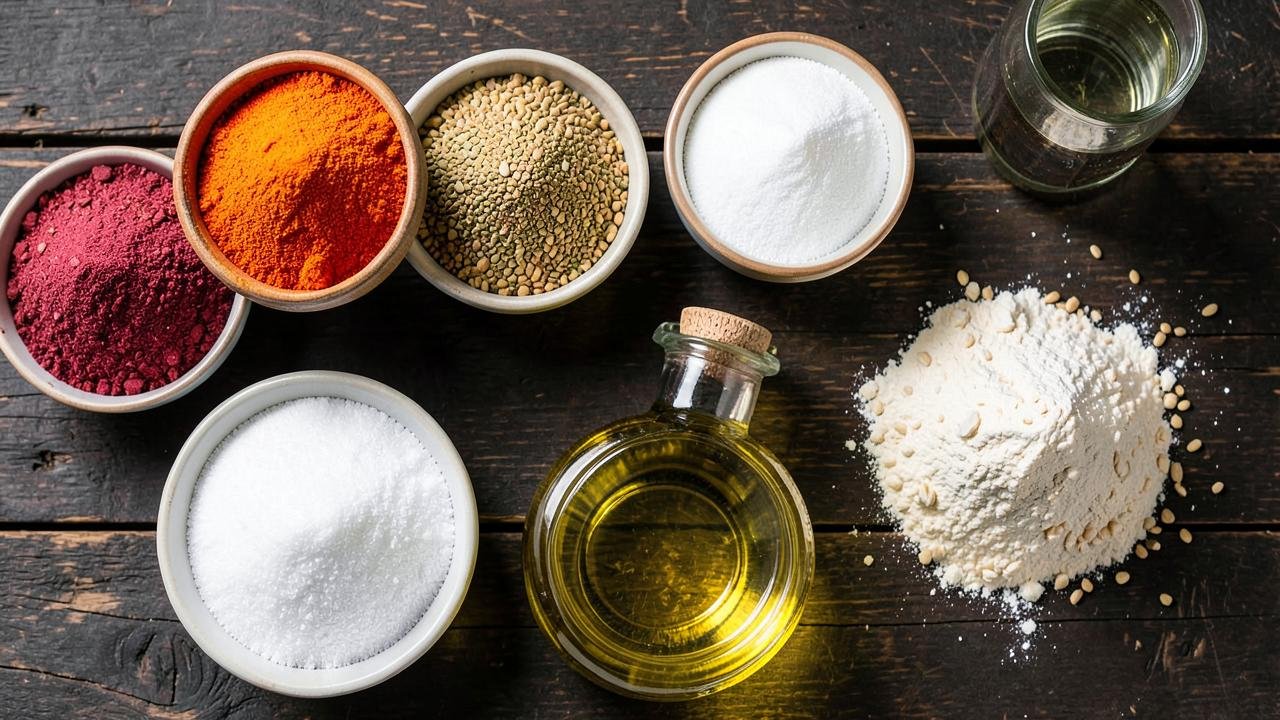
Ingredient buying sits between commodity trading and technical procurement. The products are traded in bulk, but the buyer is usually a manufacturer whose process will fail if a parameter drifts. That makes specification precision more important here than in almost any other food category.
Spices
Spices are the highest-variance category. Volatile oil content, colour value (ASTA for paprika and chilli), mesh size for ground products, and microbiological load all vary by origin, crop and processing route.
The dominant risks are microbiological contamination and adulteration. Specify treatment method (steam sterilisation versus irradiation, acceptability differs by market), require a certificate of analysis per lot, and test for the adulterants known in that specific spice. Whole spices ground in-house give the buyer more control than pre-ground purchases.
Sugar
Sugar trades against well-known international benchmarks, and specification is comparatively standardised: ICUMSA value defines colour and refinement, with 45 as refined white and higher numbers indicating progressively rawer product. Beyond ICUMSA, specify polarisation, moisture, ash, and granulation.
The main practical hazards in sugar sourcing are counterparty risk and documentary fraud, particularly in large-volume 'offers' circulating through broker chains. Deal with verifiable refiners and established traders, and treat unsolicited discounted offers with scepticism.
Edible oils
Palm, sunflower, soybean, canola and specialty oils each have distinct quality parameters: free fatty acid content, peroxide value, moisture and impurities, colour, and for palm products, melting characteristics. Refined, bleached and deodorised grades differ substantially from crude.
Oils are also a packaging and logistics question. Flexitank, ISO tank, drum and jerry can each carry different cost, contamination risk and handling requirements at destination. Confirm your receiving facility's capability before choosing.
Flour and milled products
Flour is bought on functionality, not just composition. Protein content, ash, moisture, falling number and water absorption determine baking performance, and a mill that meets your chemical specification can still produce flour your line cannot run.
Trial before committing volume. For repeat supply, agree a control chart of key parameters rather than a single pass/fail limit, so drift is visible before it becomes a production failure.
Cross-cutting practice
SourceBridge Commodities helps ingredient buyers shortlist and qualify suppliers, coordinate technical samples, and structure supply arrangements that hold up across multiple production runs.
- Insist on a certificate of analysis per production lot, not per contract
- Agree the test method, not just the limit
- Retain sealed samples from every shipment
- Understand whether your price references a published benchmark or is a fixed negotiated level
- Plan for seasonality and currency exposure on annual contracts
Looking to source food ingredients? Contact SourceBridge Commodities today.
Contact SourceBridge Commodities