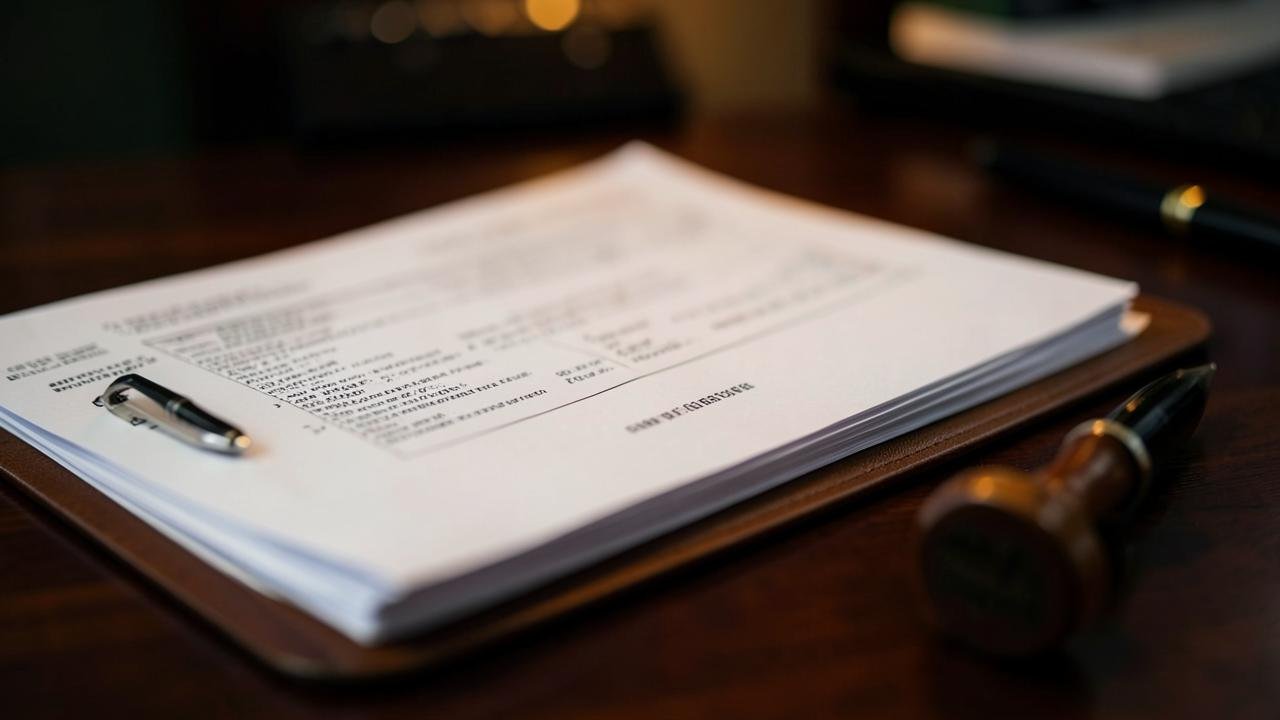
In international trade, the cargo moves on documents. A container sitting correctly loaded at a destination port with a discrepancy in its paperwork is, commercially, a container that has not arrived. Understanding what each document does, and who issues it, removes most of the friction from a first transaction.
The core commercial set
- Commercial invoice, the legal statement of what was sold, to whom, at what price and on which incoterm. Customs valuation starts here.
- Packing list, quantity, weights, carton or bag counts, and marks. Must reconcile exactly with the invoice.
- Bill of lading (or air waybill), the carrier's receipt, the contract of carriage and, when negotiable, a document of title. Whoever holds an original negotiable B/L controls release of the goods.
- Certificate of origin, states where the goods were produced; may be required for duty preference under a trade agreement.
Food and agricultural specifics
Agricultural cargo carries a second layer of documentation driven by plant and food safety regulation.
- Phytosanitary certificate, issued by the exporting country's plant protection authority, confirming the consignment is free of quarantine pests.
- Fumigation certificate, where treatment is required by contract or by the importing country.
- Health / free-sale certificate, required by many markets for processed foods.
- Certificate of analysis, laboratory results against the agreed specification, including aflatoxin or pesticide residue testing where relevant.
- Halal, kosher, organic or other scheme certificates where the end market requires them.
- Weight and quality certificates from an independent inspection company.
Payment mechanisms shape the document set
Under an advance payment or open account, documents are simply couriered or released electronically. Under documentary collection or a letter of credit, the documents become the payment trigger, and the bank examines them strictly against the terms.
The most common cause of letter-of-credit delay is not fraud; it is inconsistency. A goods description that varies by one word between the L/C and the invoice, a late shipment date, a missing signature or an expired inspection certificate all constitute discrepancies. Discrepancies mean either a fee and a waiver request, or non-payment.
Practical discipline that prevents problems
- Agree the exact document list in the contract, including who issues and who pays for each
- Circulate draft documents for approval before originals are issued
- Copy the goods description verbatim across all documents when an L/C is involved
- Confirm destination requirements before shipment, importing-country rules change
- Keep scanned copies of everything and track courier movement of originals
Where an intermediary helps
Documentation coordination is unglamorous and heavily detail-driven, which is exactly why it fails. SourceBridge Commodities supports buyers and suppliers through the documentary phase, assembling the required list, reviewing drafts against contract and L/C terms, and keeping both sides to the shipment timeline.
Need support coordinating your next shipment? Contact SourceBridge Commodities today.
Contact SourceBridge Commodities